
Cortisol has become the internet's favorite villain. Scroll long enough and you will learn it is responsible for your waistline, your tiredness, your cravings, and possibly the weather. The real story is more interesting: cortisol is not a villain at all. It is a perfectly good hormone stuck in a terrible schedule.
Understanding what it actually does, and what chronically elevated stress genuinely costs you after 40, is worth ten minutes. Especially because the single best-evidenced tool for managing it is probably the reason you are reading this site.
What does cortisol actually do?
Cortisol is your body's mobilization hormone. It rises in the morning to get you out of bed, spikes when something demands action, and releases stored energy so your muscles and brain can respond. In short bursts, this is healthy and necessary. Your morning cortisol peak is a feature, not a bug.
The problem is dosage and duration. The system was built for short emergencies with recovery in between. Modern stress is a slow drip that never fully shuts off: deadlines, traffic on the 10, aging parents, a phone that chirps at all hours. Under that constant signal, cortisol stays moderately elevated for months, and that is where the body composition trouble starts.
How does chronic stress change body composition?
Three well-documented ways:
- It encourages deep abdominal fat storage. Chronically elevated cortisol biases fat storage toward the visceral kind, the around-the-organs fat we covered in our visceral fat guide. Stress does not just add weight; it chooses the worst neighborhood for it.
- It leans on muscle. Cortisol is catabolic: part of its job is breaking tissue down for energy. Kept high for long stretches, it works against the muscle you are trying to build and keep, which after 40 is already a contested asset.
- It drives stress eating. Cortisol increases appetite, with a documented preference for calorie-dense comfort food. The afternoon vending machine run during a brutal week is biology doing exactly what it was built to do, at exactly the wrong time.
Put together, the pattern explains a person many of us recognize: not eating dramatically more, not training less, but slowly swapping muscle for abdominal fat across a stressful decade. The scale might barely move while the composition quietly deteriorates, which is why we track composition instead of weight in the first place.
Does exercise raise or lower cortisol?
Both, in the best possible way. A training session is itself a short, sharp stressor: cortisol rises during the work, then falls below baseline as you recover. Repeat that pattern a few times a week and your whole stress system gets better at its actual job, spiking when needed and standing down when not. Think of it as interval training for your stress response.
The key word is appropriate. Training hard every single day with poor sleep flips the benefit: you become another chronic stressor in your own life. This is why our programming includes planned recovery, and why coaches who know you can spot an overcooked week before you can. Two to three well-structured strength sessions with easy movement between them sits in the sweet spot for most adults over 40.
What else actually moves the needle on stress?
The honest list is short and familiar: sleep, which we covered in detail in why sleep is the missing piece of fat loss; daylight and movement, which October in the Foothills hands you for the asking; and genuine social contact, which lowers measured stress markers in ways solitary scrolling does not.
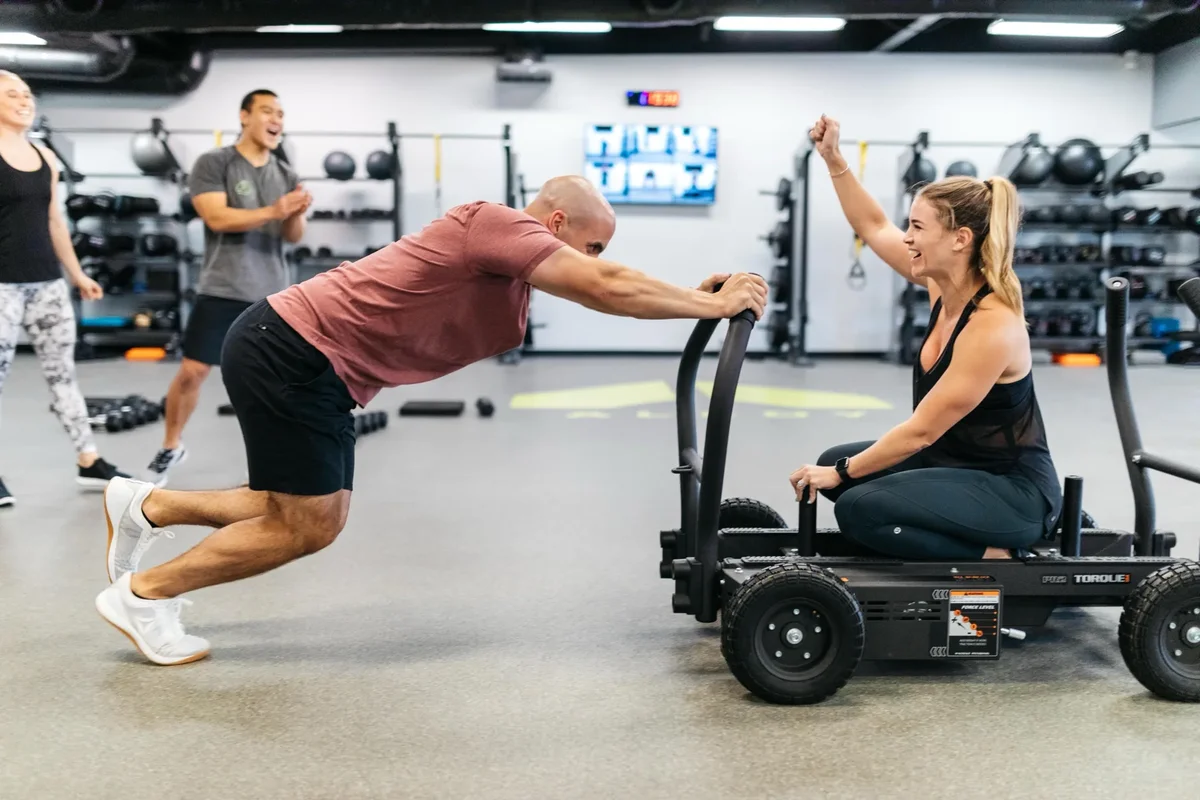
That last one is an underrated feature of training in a small group. The hour is partly about the weights and partly about being a person among people, twice a week, on purpose. Members tell us it is the most reliably good hour of their week, and we suspect the cortisol data would agree with them.

What should you do if this sounds like you?
Start with the one lever that pulls the others: consistent strength training in a setting you enjoy. It improves sleep, provides the recurring social hour, teaches your stress system to cycle properly, and directly defends the muscle cortisol wants to spend.
Your first visit to our Ahwatukee Foothills studio is a Starting Point Session: a conversation about your goals and your actual life, an InBody scan including visceral fat, a movement assessment, and an introductory workout. If the last few years have been a lot, that is not a reason to wait. It is the reason. Book Your Complimentary VIP Consultation and let us build the counterweight.