
Most people step on a scale and see one number. Most of what that number can do to you, for better or worse, is invisible. The fat you can pinch at your waist is not the fat your doctor worries about. The fat your doctor worries about sits deeper, wrapped around your liver, pancreas, and intestines, and it is called visceral fat.

You cannot see it in the mirror. Two people with the same waistband size can carry very different amounts of it. That is exactly why we measure it, and why the visceral fat number on your monthly InBody scan deserves more of your attention than your weight does.
What is visceral fat, exactly?
Your body stores fat in two main places. Subcutaneous fat sits just under the skin. It is the fat you can pinch, and in moderate amounts it is mostly harmless. Visceral fat is stored inside the abdominal cavity, packed around your organs.
The trouble with visceral fat is that it does not just sit there. It behaves almost like an organ of its own, releasing compounds that promote inflammation and interfere with how your body handles blood sugar. Researchers have connected elevated visceral fat with a long list of outcomes nobody wants, which is why it has become one of the most-watched numbers in metabolic health.
After 40, the storage pattern shifts. Hormonal changes in both men and women nudge the body toward storing more fat viscerally, even in people whose weight has barely moved. This is part of why "my weight is the same but my waist is different" is such a common report in this decade of life.
Why does the scale miss it?
Because the scale adds everything together. Muscle, bone, water, subcutaneous fat, visceral fat: one number, no detail. You can lose a pound of muscle and gain a pound of visceral fat, and your bathroom scale will congratulate you on staying exactly the same.
An InBody scan separates the categories. It estimates your skeletal muscle mass, your total body fat, and your visceral fat level as its own line item. That last line is the one that tells you what the mirror and the scale cannot. We walked through the full report in our guide to reading your InBody scan results, and visceral fat is the section members end up asking about most.
What actually lowers visceral fat?
Here is the genuinely encouraging part: visceral fat responds to training faster than almost any other fat on your body. It is metabolically active, which makes it dangerous when it accumulates and cooperative when you start working against it.
The approach that works is not exotic:
- Strength training, two to three sessions a week. Building muscle improves how your body handles blood sugar, and muscle is where much of the sugar you eat gets put to use instead of stored.
- Regular easy movement. Walks count, and in October, Ahwatukee finally gives them back to you. The loop around Mountain Park Ranch at seven in the morning is a legitimate part of a visceral fat plan.
- Reasonable eating, most of the time. No named diet required. A protein-forward plate with mostly whole foods does the job.
- Decent sleep. Short nights push the hormones that encourage deep abdominal fat storage in the wrong direction.
Notice what is missing: endless crunches. You cannot target visceral fat with ab exercises. It leaves the way it arrived, through your overall metabolic picture, not through any particular movement.
How fast does it change?
Faster than you would guess. Members who train consistently often see their visceral fat level drop within the first two to three months, sometimes while their total weight barely moves. That is the pattern we flagged in our post on monthly InBody scans versus the bathroom scale: the scale says nothing happened, the scan says the most important number in the report just improved.
This is also why we scan monthly. A number you only measure once a year cannot steer anything. A number you check every four weeks becomes feedback, and feedback is what keeps a plan honest.
What should your first step be?
Find out your starting point. Guessing is useless here, because visceral fat does not show from the outside, and the people carrying the most of it are often not the people who look like they are.
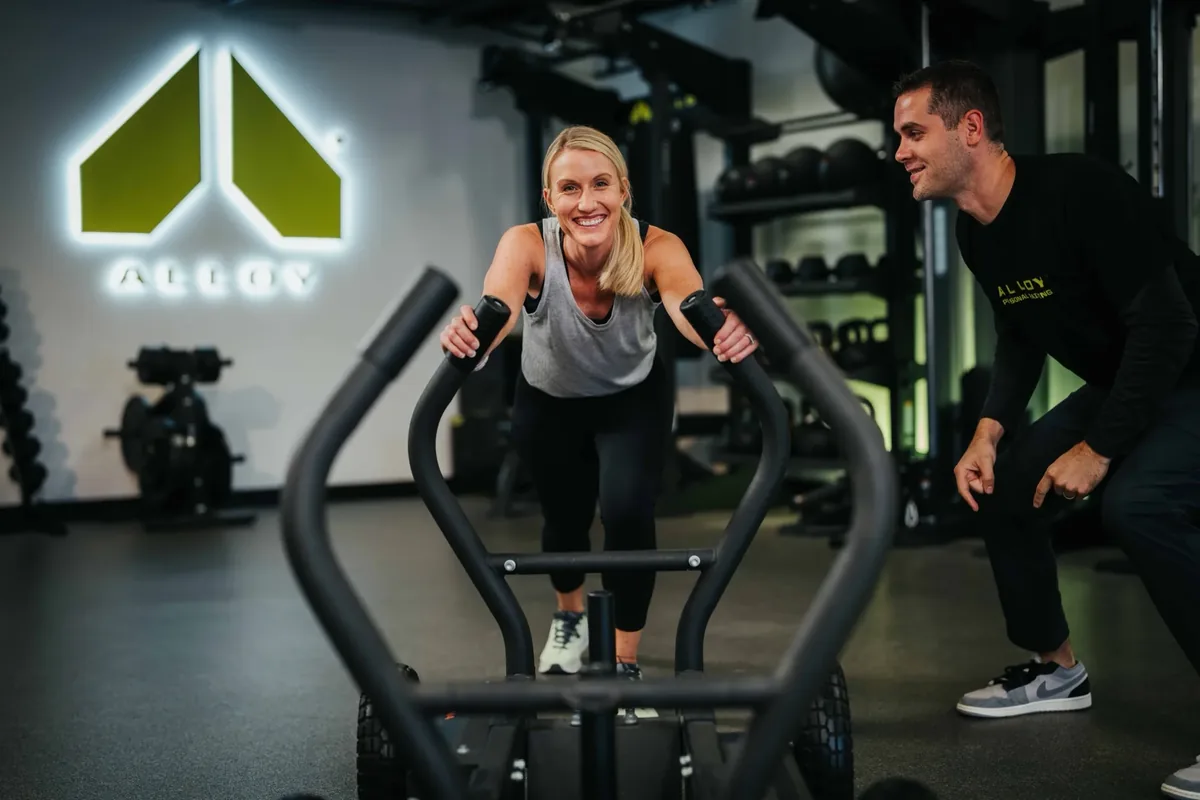
Your first visit to our studio in the Ahwatukee Foothills is a Starting Point Session: a conversation about your goals and health history, an InBody scan that includes your visceral fat level, a movement assessment, and an introductory coached workout. You leave knowing your actual numbers and what a sensible plan to improve them looks like.
If you are in Ahwatukee, near Club West, Lakewood, or Mountain Park Ranch, that answer is a few minutes from your front door. Book Your Complimentary VIP Consultation and let the scan tell you what the scale has been leaving out.