
Ask ten people how to lose fat after 40 and eight will say some version of "more cardio." It's the default answer of an entire generation: lace up, log miles, sweat it off. So it surprises people when a fat-loss phase built around strength training outperforms the cardio-only plan they've restarted every January since 2015.
This isn't a case against cardio. It's a case for understanding what each tool actually does, because after 40 the difference stops being academic. Here's the honest comparison.
What is cardio actually good at?
Plenty, which is why the answer here is never "skip it":
- Endurance. Cardio builds the engine for the activities that make life good: the long morning loop, the hike, the bike ride, keeping pace with your kids.
- Energy spent during the session. Movement uses energy while you're moving, and in a fat-loss phase that contributes.
- Enjoyment and sanity. For many people the walk or the swim is the best part of the day. Activity you genuinely love is activity that never needs willpower. Never give that up.
Cardio's limitation is just as specific: it does very little to build or defend muscle and strength. And in a fat-loss phase after 40, that turns out to be the whole game.
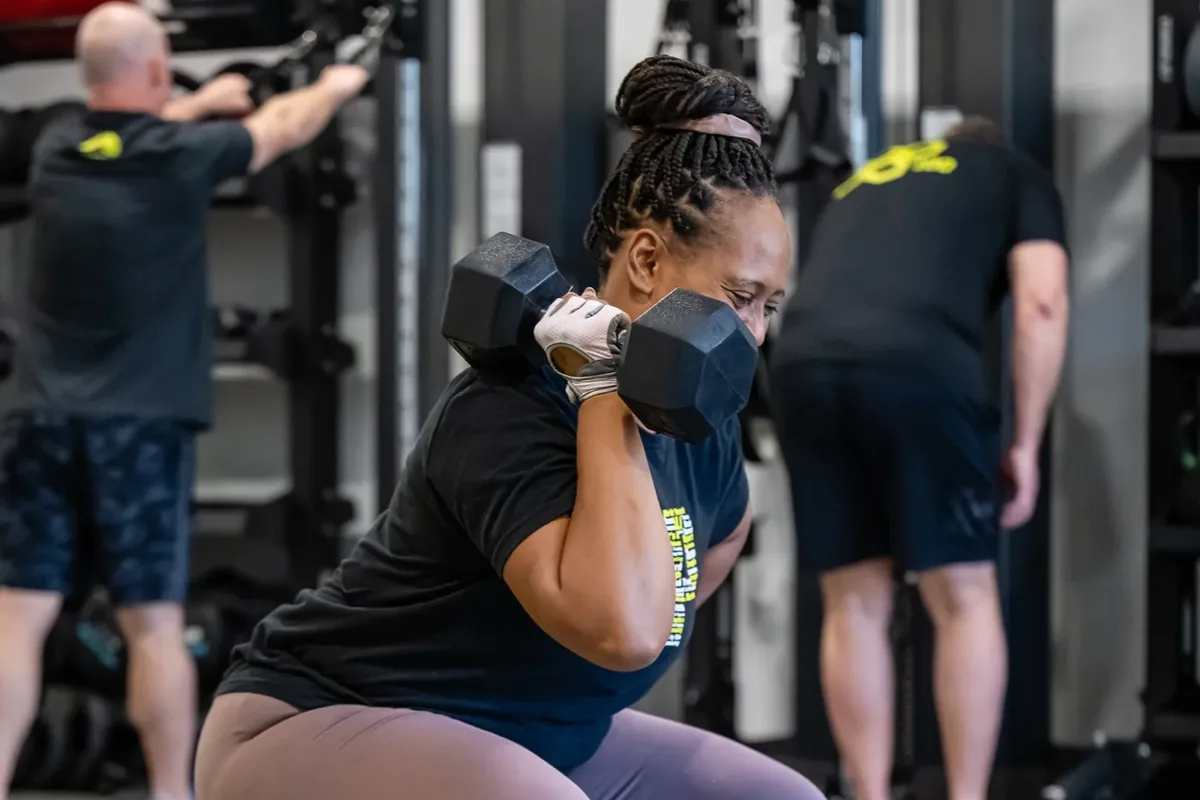
What does strength training do that cardio can't?
It decides what kind of weight you lose. When you lose weight without strength training, not everything that leaves is fat. Some of what the scale celebrates is muscle and strength you wanted to keep. You end up smaller but not better: weaker on the trail, flatter in the mirror, and set up to regain. Coaches call it the classic cardio-only outcome, and after 40, when strength is already the thing quietly drifting, it's a worse trade than ever.
Strength training flips the result. People who keep two to three progressive strength sessions a week through a fat-loss phase hold on to far more of their strength and muscle than people who rely on cardio alone. That's the practical, observed difference, and it's the entire point. The fat-loss phase subtracts the thing you wanted subtracted while defending the strength your next decades run on. That's the difference between losing weight and actually changing your body composition, and it's visible on a monthly InBody scan, where you can watch muscle hold steady while body fat falls. One number on a bathroom scale would have called those two outcomes identical.
So which one should drive fat loss after 40?
Strength training is the anchor; cardio is the accelerant. If your week only has two or three training hours in it, which is the realistic number for most adults over 40, those hours belong to coached, progressive strength work, with movement you enjoy layered around it. That priority order isn't ideology. It follows from the jobs each tool does. Cardio helps spend energy. Strength training protects what you keep. In a fat-loss phase, the second job is the one you can't delegate.
And to be clear about what the training can and can't do: no workout outruns the rest of your life. Eating habits, sleep, and stress carry at least as much of the outcome, which is why our members get ongoing, evidence-based nutrition guidance rather than a laminated diet sheet, and why the honest promise is steady change over months, not a transformation by Labor Day.
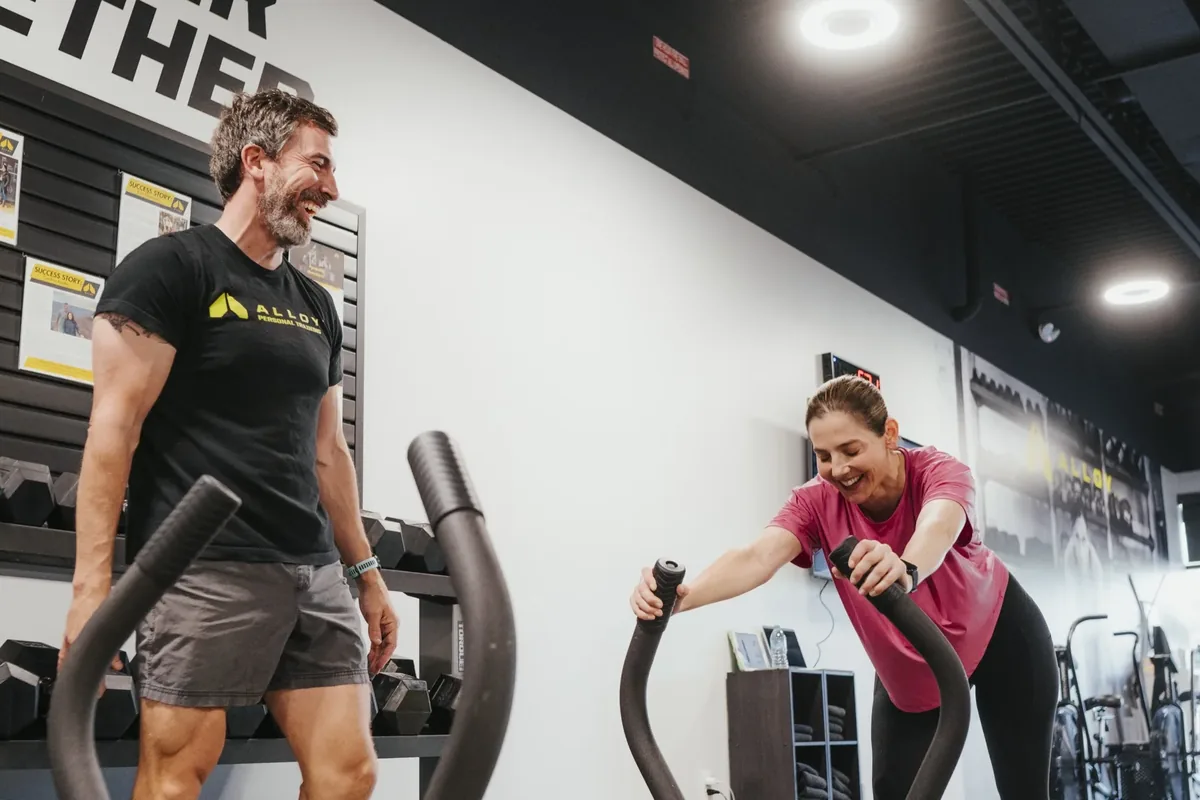
What does a balanced week look like after 40?
Here's the template we build from at our Ahwatukee studio. It gets adjusted per member, but the shape holds:
- Two to three strength sessions: coached, full-body, progressive, individualized to your history. The non-negotiable core of the week.
- Two to four easy cardio blocks: walks through Mountain Park Ranch before the heat, a swim, the Club West loop. Conversational pace, genuinely enjoyable, consistently done.
- One genuinely off day, minimum. Recovery is when the week's work gets banked, and after 40 it's part of the program, not a concession.
Notice there's no seventh-day heroism and nothing you'd dread by Wednesday. A week you can repeat for a year beats a perfect week you abandon by February. Consistency is the actual mechanism, and everything above is designed to protect it.
What if you love running — or hate cardio entirely?
Both people are fine; neither needs to convert.
If you're a runner or cyclist: keep it. Nobody here will take your miles. Add two strength sessions a week and treat them as protecting the running, not competing with it. Runners over 40 who strength train consistently tell us the same things: hills feel shorter, long runs end better, and the little complaints that used to interrupt training season show up less often. Your endurance base makes you a better strength trainee, not a conflicted one.
If you've always hated cardio: stop forcing the version you hate. The comparison in this article isn't a sentence to the treadmill. Brisk walks, a pool, or a bike around the neighborhood all do the job, and the job is modest: easy, enjoyable movement layered around your strength sessions. Fat loss after 40 has never once required a machine you dread.
How do you keep it going past the first month?
Structure over willpower. The members who remain here a year later share three habits. Their strength sessions are scheduled appointments with a coach and five other people who notice absence. Their progress is audited monthly with body composition data instead of daily with a mood-driven weigh-in. And their cardio is something they'd do anyway, because they like it. Build those three structures and the plan mostly runs itself.
If you want the full picture of how coached training works here, with assessment first, sessions capped at six, and programming that adapts monthly, start with our guide to personal training for adults over 40 in Ahwatukee, or zoom out to the long game with longevity training. And if you'd rather just get started: Book Your Complimentary VIP Consultation for an InBody scan, a movement assessment, a coached workout, and straight answers, no pressure.