
November in the Valley means running weather is finally back. The group runs reappear, the winter race calendar fills up, and runners who spent the summer negotiating with the treadmill head outside to rebuild toward a spring goal.
If you are one of them and you are over 40, we want to make the case for the training you are probably still skipping. Not more miles. The weights.
Why do runners over 40 need strength training?
Because running is a sport of repeated single-leg landings, thousands per run, each absorbing several times your body weight, and the structures doing that absorbing are exactly what age erodes. Muscle mass, tendon resilience, and bone density all drift downward from your 40s onward unless something pushes back. Mileage does not push back nearly as hard as runners assume: running maintains the engine but does surprisingly little for the chassis.
The research on runners who lift is about as one-sided as sports science gets:
- Fewer overuse injuries. Stronger muscles and tendons absorb load that otherwise lands on joints and bone. The classic runner injuries, from IT band complaints to shin trouble, track closely with weakness up the chain.
- Better running economy. Strength work makes each stride cost less energy at the same pace. For masters runners, studies consistently show economy improvements from heavy, low-rep strength training, which is close to a legal performance drug.
- A stronger finish. Late-race form collapse is mostly strength endurance running out. Lifters hold posture and stride length when it counts.
Will lifting make me bulky or slow?
No, and this fear has cost more runners more healthy seasons than any injury. Building significant muscle size requires a dedicated surplus of food and volume that a running schedule actively prevents. What two strength sessions a week actually buy you is force: more push per stride, more durability per mile, at essentially the same body weight.
The adaptation that matters here is neurological as much as muscular, especially in the first months: your nervous system learns to recruit the muscle you already own. That is why runners often get measurably stronger for weeks before the InBody scan shows much change in mass, and why the scale is the wrong scoreboard for this project. We covered that distinction in body composition versus weight.
What should runners actually train?
The list is short and specific:
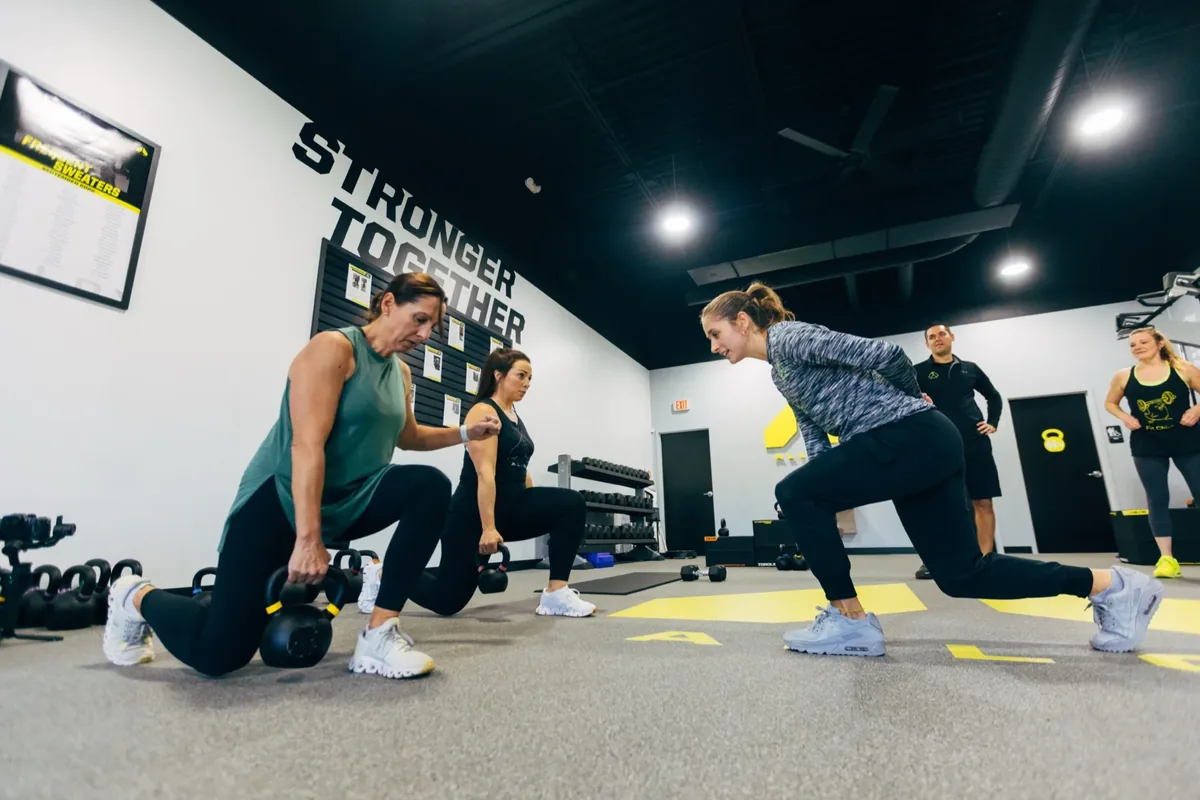
- Single-leg strength. Step-ups, lunges, split squats. Running happens one leg at a time; training should too, at least partly.
- Hinge strength. Deadlift variations build the glutes and hamstrings that power stride and protect hamstrings from late-race surprises.
- Calf and foot capacity. The most undertrained link in most runners, and the site of many of the saddest spring injuries.
- Trunk strength under fatigue. Carries and anti-rotation work, so mile ten looks like mile two.
Heavy and brief beats light and exhausting. Three to five hard reps leave your legs fresh enough to run the next day; twenty-rep burnout sets do not. This is a programming craft problem, and it is exactly the kind of thing a coach solves in a program built around you rather than a generic template.
How does lifting fit into a running week?
Two strength sessions, placed on or near harder running days so your easy days stay genuinely easy. A sample week for someone building toward a winter or spring race:
- Tuesday: quality run, strength session later that day or the next morning
- Thursday: strength session, easy run optional
- Saturday: long run
- Remaining days: easy miles, walking, rest
During race week, we trim, not cut: lighter loads, same movements. Runners who drop lifting entirely for the final month tend to arrive at the start line slightly less durable, which is the opposite of a taper's job.

Where should a runner start?
With an assessment, because a decade of running leaves a signature: strong in the plane you travel, underbuilt everywhere else. Your first visit to our Ahwatukee Foothills studio is a Starting Point Session, with a movement assessment that finds your specific gaps, an InBody scan for a real baseline, and an introductory coached workout.
Sessions are capped at six, coached start to finish, and programmed to leave your running legs intact. If your winter plans include a bib number, or you just want the trails above Desert Foothills Parkway to feel easier this season, Book Your Complimentary VIP Consultation and bring your race calendar. We will build around it.