
At some point after 40, almost everyone files the same complaint: I am getting stiff. Reaching the top shelf, looking over a shoulder while reversing, getting down to the floor and back up without a soundtrack of grunts. The standard prescription for this, repeated everywhere, is stretch more.
Here is the uncomfortable truth about that prescription: for most people it barely works. Not because stretching is bad, but because stiffness after 40 is usually not a flexibility problem. It is a strength problem wearing a flexibility costume.
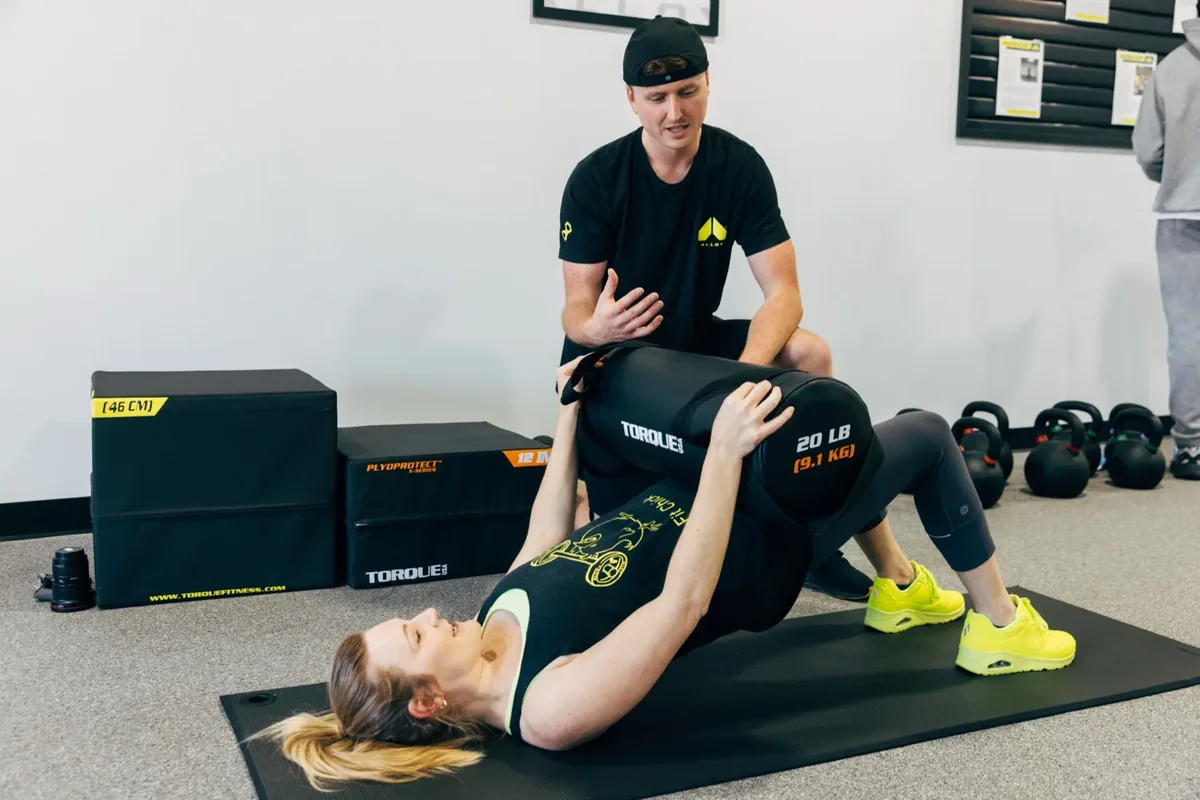
What is the difference between flexibility and mobility?
Flexibility is passive range: how far a joint can be moved, by gravity or a strap or a yoga instructor. Mobility is active range: how far you can move a joint yourself, with control, under your own power.
The difference sounds academic until you watch it in real life. Being able to touch your toes is flexibility. Being able to lower yourself to the floor, pick up the thing you dropped, and stand back up smoothly is mobility. One of these shows up in daily life constantly. The other mostly shows up in stretching classes.
After 40, what fades fastest is not your passive range. It is your strength in the end of that range: the deep squat position, the overhead reach, the long step. Unused, those positions become weak. Weak positions feel unsafe, so your nervous system quietly fences them off, and you experience that fence as stiffness.
Why does stretching alone fall short?
Because stretching asks for range without building any strength to control it. You can stretch your hamstrings every morning for a year, and if you never load the lengthened position, your body has no reason to trust it. The range you gain on the mat tends to evaporate by lunchtime.
Strength training through a full range of motion does something different. A deep goblet squat, a walking lunge, a Romanian deadlift taken to an honest depth: these load your muscles at length, and loaded range is range your nervous system keeps. The research here is genuinely satisfying: full range strength training improves flexibility about as well as dedicated stretching programs, while also building the strength and bone that stretching never touches.
What does mobility work look like in a strength program?
Mostly, it looks like good training done honestly:
- Full range on the main lifts. Squats to real depth, presses through a complete arc, rows that finish. Range is earned gradually, not forced on day one.
- Loaded positions daily life actually uses: step-ups, carries, getting down to the floor and up again.
- Targeted work where your assessment says you need it. Stiff ankles and tight hips get specific attention, not a generic stretching handout.
- A warm-up that moves joints through range instead of just passing time.
This is one reason we assess movement before anyone trains with us. Stiffness is specific. The plan that fixes a stiff thoracic spine is not the plan that fixes cranky hips, and guessing wastes months. It is the same logic we applied to desk posture: find the actual restriction, then strengthen through it.
Does this mean stretching is useless?
No. Stretching feels good, it helps you wind down, and for genuinely shortened tissue it has a role. If you love your evening stretch, keep it. The point is sequence and emphasis: stretching is the garnish, strength through range is the meal. People who get this backwards spend years limber on the mat and stiff everywhere else.
It also pairs well with the balance work we covered in balance training over 40, because controlled range and balance are close cousins: both are your nervous system learning to trust positions again.
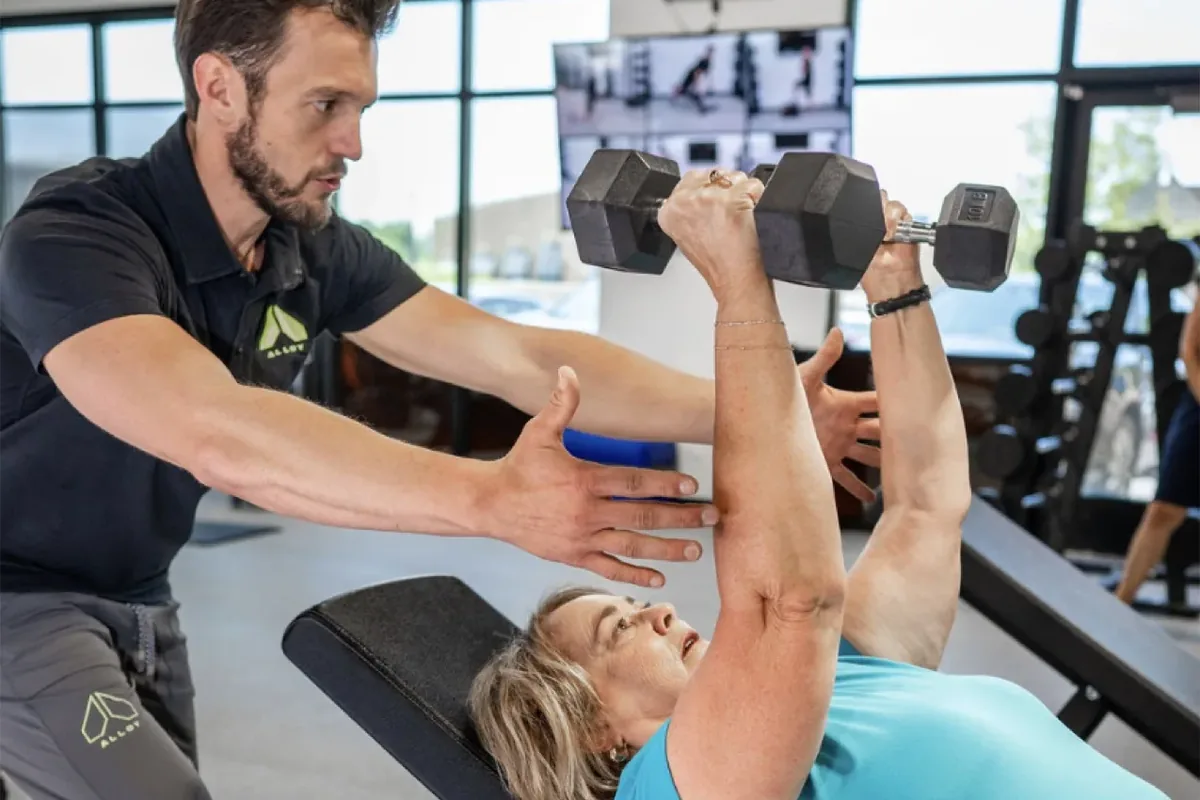
How do you know where to start?
With an assessment instead of an assumption. Your first visit to our Ahwatukee Foothills studio is a Starting Point Session: a goals conversation, an InBody scan, a functional movement assessment that finds where your range actually is, and an introductory coached workout built around what we find.
Most members are surprised by what the assessment turns up. The shoulder they thought was tight is fine; the ankles they never considered are doing the limiting. That specificity is what makes the next six months productive. If you are in Ahwatukee, near Desert Foothills Parkway or Club West, Book Your Complimentary VIP Consultation and let us find your actual starting point.