
Balance is a trainable skill, the same way strength is, and like any skill it quietly rusts when nothing in your life asks for it. That is the short answer on balance training over 40: you can absolutely improve it, the builders are ordinary strength-room staples (single-leg work, loaded carries, controlled-tempo movement, core stability), and you do not need a separate wobble-board hour to train it. A well-built strength program already contains the balance work, which means the adults who lift well are training balance without ever putting it on the schedule.
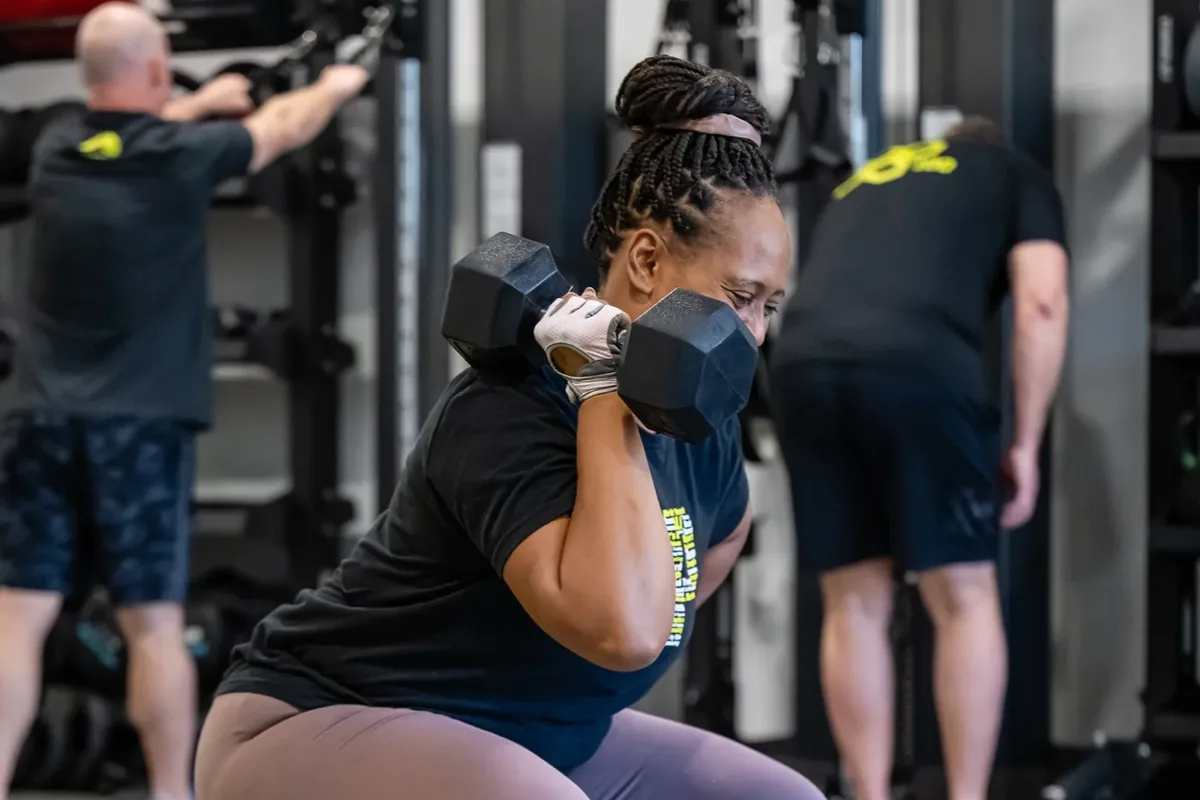
Why does balance fade when it is not trained?
Because modern adult life is engineered to stop asking for it. Flat floors, handrails, chairs, cars: you can go weeks without standing on one foot or crossing a surface that is not level. Skills that are never called on get quietly archived, and balance is a skill, not a fixed trait you were issued at birth.
The encouraging half of that sentence is the second half. Skills respond to practice. Ask your body to stabilize on one leg twice a week, under a little load, with a coach watching your form, and it relearns the job. Members are often surprised how quickly the first improvements arrive, because they had quietly filed balance under things that were gone rather than things that were dormant.
What actually builds balance?
Not standing on a foam pad with your eyes closed. The practical builders are ordinary movements done with intent:
- Single-leg work. Split squats, step-ups, single-leg deadlift patterns, lunges. One foot on the floor means your hips, ankles, and core all have to negotiate in real time, which is precisely the skill.
- Loaded carries. Walking with weight in one hand or both is balance training disguised as simplicity. Every step is a small stability problem your body solves on the move.
- Controlled tempo. Lowering slowly and pausing removes momentum, which is where wobble hides. Three controlled seconds down teach more stability than thirty bouncy reps.
- Core stability work. Planks, anti-rotation presses, dead bugs. A trunk that resists being tipped is the platform every other balance skill stands on.
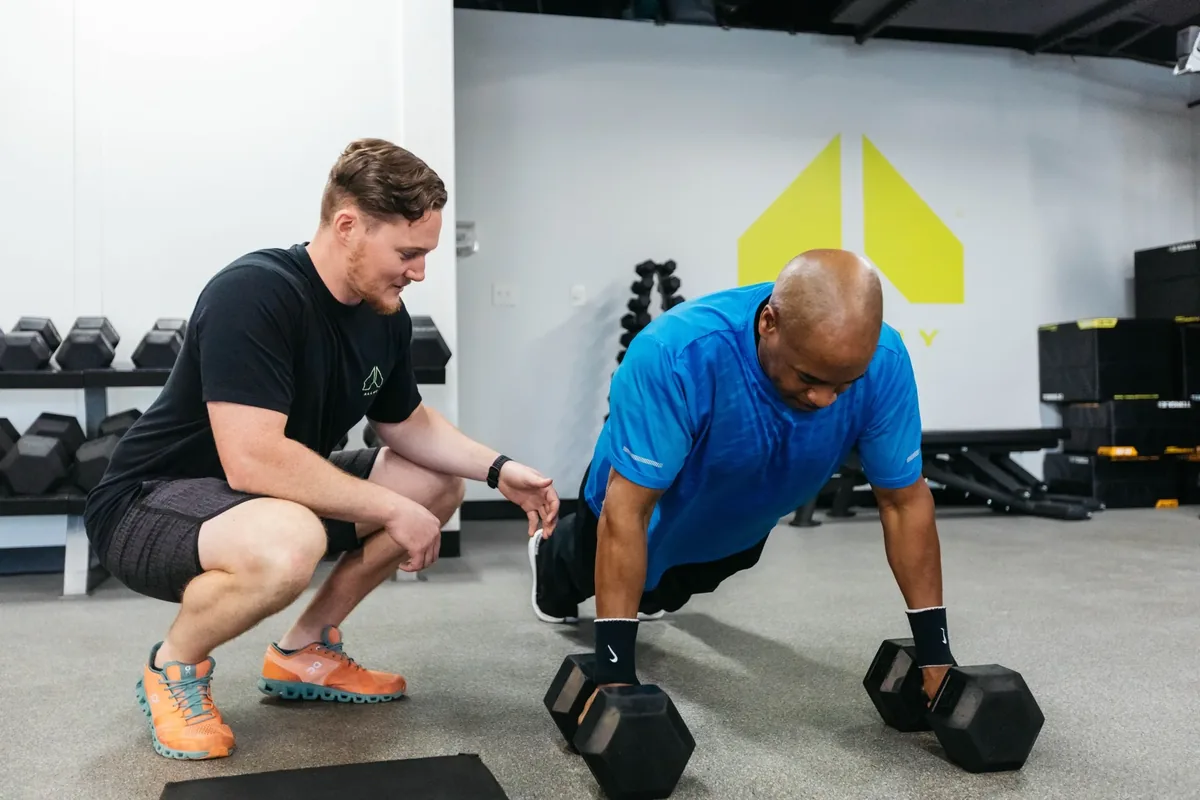
Two things make that list work: progression and honesty. Each movement scales from supported versions, a hand on a rail, a shorter step, a lighter carry, to genuinely challenging ones, and the honest starting point matters more than the ambitious one. A coach's job is to find the version that asks something of you today and keep nudging it forward.
Where does balance work hide inside a strength program?
Everywhere, if the program is built well. Look at a typical coached week at Alloy Personal Training Ahwatukee Foothills and you will find split squats or step-ups in the leg work, carries between blocks, tempo prescribed on the lowering phase, and core stability in the warm-up. Nobody announces any of it as balance training. It is simply what good programming for adults over 40 looks like, and the balance benefit rides along with the strength.
That is why we tell members they do not need a separate stability hour. The question is not whether to add balance training to your week; it is whether your current training contains any. Steady-state cardio and fully supported routines have their virtues, but they rarely ask much of your stabilizers, while movements you control through space, progressed and coached, ask constantly. This is also where coaching earns its keep: single-leg and tempo work are exactly the movements where form drifts, and a coach who watches your reps keeps the practice honest. It also pairs naturally with how we handle recovery in strength training after 40, because balance work costs little to recover from and can show up frequently.
Key Takeaway
Balance is a skill, and skills respond to practice. Single-leg work, loaded carries, controlled tempo, and core stability are the practical builders, and a well-built strength program already contains all four. Train coached strength two to three times a week and you are training balance without scheduling a separate hour for it.
What does better balance buy you day to day?
The payoffs are not abstract. They are Saturday morning:
- Trails. Rocky descents and switchbacks on the trails above Ahwatukee stop being a negotiation and go back to being a hike.
- Ladders and step stools. Changing an air filter or hanging lights with two steady feet under you instead of one hand clamped to the wall.
- Uneven ground. Gravel, curbs, pool decks, a dark backyard: surfaces you cross without giving them a thought, which is the whole idea.
- Sport. Pickleball lunges, a golf swing that finishes in balance, keeping your feet under you on a paddleboard.
- Confidence. Research associates strength and balance work with staying confident on your feet, and confidence compounds: people who trust their footing move more, and moving more keeps the skill sharp.
Notice what is not on the list: anything about limitation. Balance training after 40 is aspirational, the same way strength training is. You are not training to avoid something. You are training to be able to go wherever your weekend points.
How do you start training balance?
Start with coached strength training and the balance work comes bundled. At Alloy Personal Training Ahwatukee Foothills, sessions are capped at six members and led by a professional coach, and every exercise, including the single-leg and stability work, starts from your honest assessment and progresses at your pace. Support is there on day one for anyone who wants it, and it gets quietly smaller as the skill comes back. You can read how the whole model works in our guide to personal training for adults over 40 in Ahwatukee or see the membership details on our services page.
The first step is the same one every member takes: Book Your Complimentary VIP Consultation, which includes a conversation about your goals and health history, an InBody body composition scan, a functional movement assessment where your current balance shows up honestly, and an introductory coached workout. Steadier feet start with a single scheduled session.