
Research associates resistance training with bone health, which is why lifting keeps coming up in serious conversations about bone density for women over 40. That is the careful, honest version of the claim: resistance training is linked with supporting bone density, alongside payoffs you can feel much sooner, like strength, capability, and confidence on your feet. What research cannot do is lift anything for you, and what a blog cannot do is answer medical questions, which belong with your physician. What we can do is show you what resistance training actually looks like in practice when you start after 40, and why doing it coached beats guessing.
What does the research actually say?
Read plainly, the research is encouraging and modest at the same time. Decades of study associate resistance training with bone health in women, and lifting is consistently linked with supporting bone density as part of an active life. The pattern is steady enough that resistance training shows up in mainstream physical-activity guidance for adults at every age.
What you will not find here is a medical promise, because it would not be honest. Associations are not guarantees, individual results vary, and bone density itself is a medical topic: how yours is measured, what your numbers mean, and what to do about them are conversations for your physician. We mean that sincerely, not as fine print. Coaches coach training. Physicians handle medicine. You deserve both, doing their actual jobs.
What a training studio can speak to, with full confidence, is the training itself. So here is what it looks like.
What does resistance training look like in practice after 40?
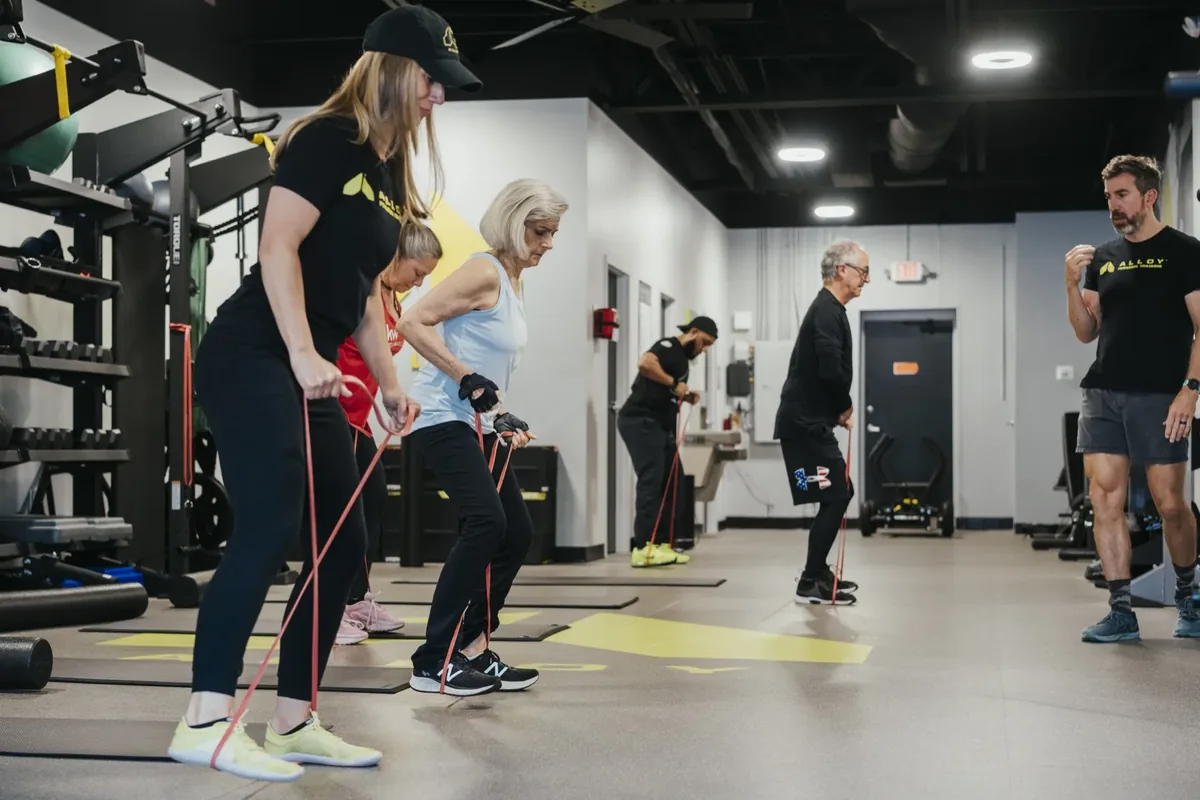
Forget the image of a barbell platform and chalk dust. Resistance training for a woman starting after 40 looks like this:
- An honest assessment first. Your program starts from how you actually move today, your health history, and your goals, not from a template. Old injuries, long layoffs, and a back with opinions are information, not disqualifiers.
- Progressive loading. You start with weights you can control with good form, and the load increases gradually as your body adapts. Progress is the plan, but it is measured in months of steady steps, not in a dramatic first week.
- Coached form. A coach who watches your reps, cues position, and adjusts in real time. Form is what makes load productive, and it is the part you cannot see from inside the exercise.
- Modifications around your history. A cranky shoulder does not cancel pressing; it changes the angle, the implement, or the range. Almost everything can be trained around, and a good coach knows the detours.
That is it. Unglamorous, repeatable, and effective, which is the pattern for most things that work after 40. We have written more about how recovery fits into strength training after 40, because the rest between sessions is where the week's work gets banked.
Key Takeaway
Research associates resistance training with bone health for women over 40, and the practical version of that training is unglamorous: coached, progressive lifting that starts from an honest assessment and adds load gradually. Questions about your own bone density belong with your physician. The training itself belongs on your calendar, two to three times a week.
Why does coached lifting beat guessing?
Progressive loading sounds simple, and the concept is. The execution is where people get stuck, in one of two directions. Some stay so light for so long that nothing is ever really asked of them. Others add load faster than their form is ready for and end up shelved by week six. Both failure modes are invisible from the inside, and both are exactly what a coach exists to catch.
At Alloy Personal Training Ahwatukee Foothills, sessions are capped at six members and led by a professional coach who progresses or modifies every exercise per person. The cap is what makes the coaching real: six people is few enough that your coach knows your history, watches your form, and decides when you are ready for more weight based on how you move, not on a chart. You can see how the model works on our services page.
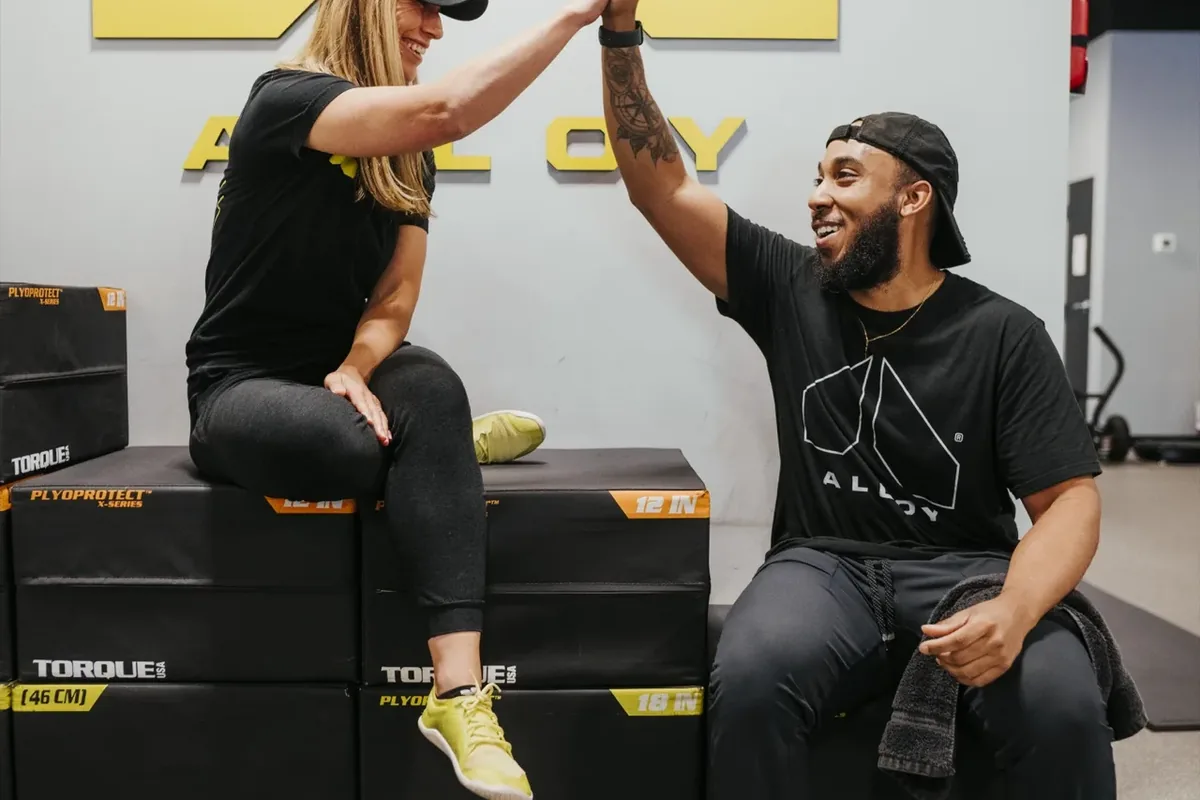
The other thing coaching solves is the part nobody talks about: continuing. Scheduled sessions with your name on them, a coach who notices when you are missing, and five other adults chasing the same thing turn training from a resolution into a routine. This is a coaching relationship with a support community, and for a goal measured in years, the community is not a bonus. It is load-bearing.
What should you expect in the first few months?
Honest expectations, because they are the ones that survive contact with real life. Most members notice improvements in energy, strength, and confidence within the first few weeks: weights that felt heavy become warm-ups, stairs stop being an event, groceries come inside in one trip. Body-composition change typically shows over 8 to 12 weeks on the monthly InBody scans every member receives. Bone density is not something you or we will see change on any short timeline, and anyone promising otherwise is selling something. You train for the things you can feel and measure this season, and you let the long-horizon associations the research describes ride along quietly in the background.
How do you start if this is new to you?
Start with information, in both directions. If you have specific concerns about your bone density or a medical condition in the mix, talk with your physician; bring what you learn to us, and your program will account for it. Then come see what assessed, coached training feels like. Many of the women training at Alloy Personal Training Ahwatukee Foothills started after years away from structured exercise, or with no lifting history at all. The program meets you where you are, at our studio in the Ahwatukee Foothills, and progresses from there.
For the fuller picture of how we build training for this stage of life, read our guide to personal training for adults over 40 in Ahwatukee. When you are ready, Book Your Complimentary VIP Consultation: a conversation about your goals and health history, an InBody body composition scan, a functional movement assessment, and an introductory coached workout, with no pressure at any step.