
Somebody in your life swears by 5 a.m. workouts and has the personality to prove it. Someone else insists evening training is when the body peaks. The internet hosts this argument daily, with charts. So, who is right?
Here is the research answer, which manages to be both anticlimactic and genuinely freeing: the best time to work out is the time you will actually keep showing up for. And in Ahwatukee, there is a local asterisk involving a giant ball of fire, which we will get to.
What does the science actually say about timing?
Studies have looked at strength, endurance, and body composition results across morning versus evening training, and the differences that show up are small, inconsistent, and dwarfed by everything else that matters. Some findings suggest physical performance ticks slightly higher in the late afternoon, when body temperature peaks. Other work shows morning exercisers tend to be more consistent, likely because life has not yet had a chance to interfere.
Notice what neither finding says: that any clock time meaningfully changes your results if the training itself is consistent and well built. Adaptation follows stimulus and recovery, and your muscles cannot read a clock. Twelve months of solid Tuesday evenings beats six weeks of heroic mornings abandoned in February, every single time.
So what should actually decide your training time?
Four questions, none of them involving optimal cortisol windows:
- When are you reliable? Not motivated, reliable. The slot that survives busy weeks is the right slot.
- When do you feel decent? Some people are useless before nine; others fade after six. Honor your own machinery.
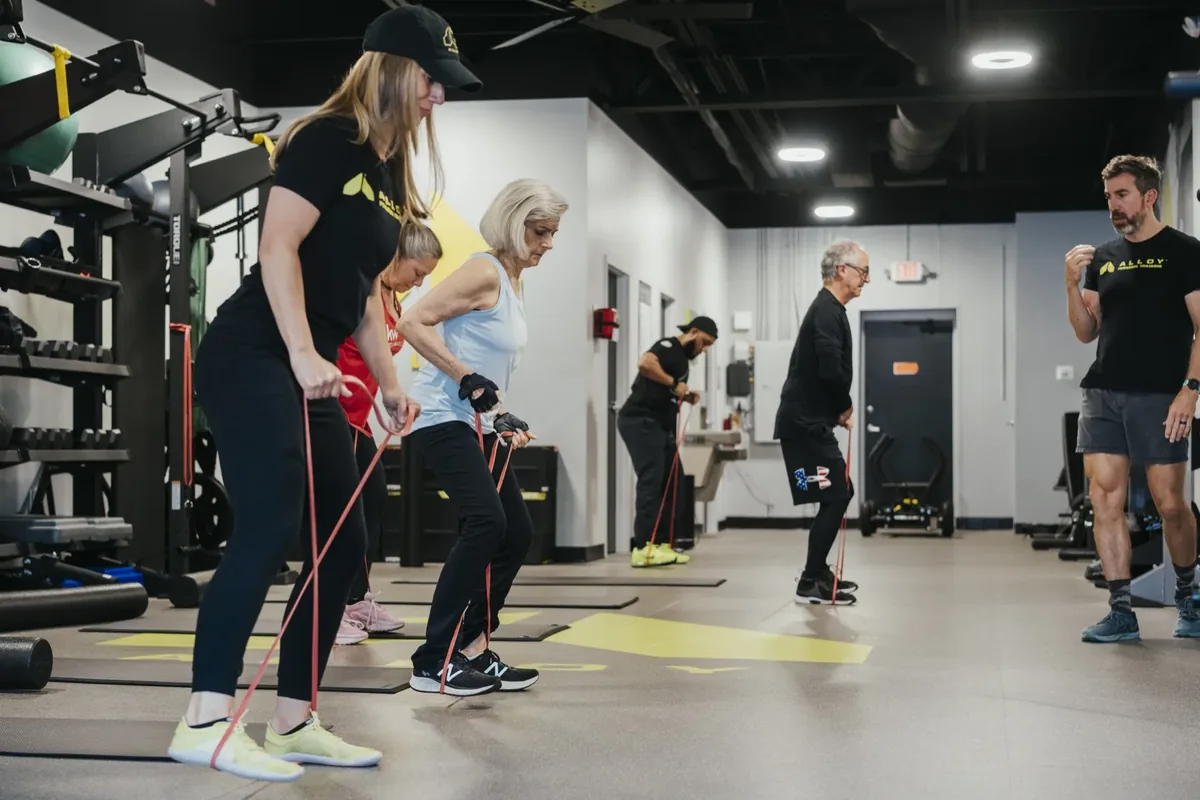
- What does your schedule protect? A booked session at a fixed time, with a coach and five people who notice absence, survives what a vague intention does not. This is half the value of appointment-based training.
- Can you sleep afterward? A minority of people find late hard training disrupts sleep. If that is you, earlier wins, because sleep is where training gets banked.
What is the Phoenix asterisk?
For roughly five months a year, the outdoor version of this question answers itself. Summer in Ahwatukee compresses all outdoor exercise into a narrow dawn window, and expecting yourself to hit a 5 a.m. trailhead from June through September is how good intentions die of heatstroke by the Fourth of July.
Indoor coached training removes the sun from the decision entirely. Your strength sessions happen in air conditioning at the same times every week, all year. Then your outdoor life, the trail mornings and golf rounds and neighborhood loops, gets scheduled around weather worth being in. Weatherproof the results; keep the sunshine recreational. Members who adopt that split stop having a summer fitness collapse to recover from every October.
Does timing matter more after 40?
Only in practical ways. Recovery matters more, so whatever time lets you sleep well earns extra credit. Warm-ups matter more, so the first-thing-in-the-morning lifter should budget a few extra minutes to get moving; our guide to what changes after 40 in recovery covers the fuller picture. And calendars matter more, because the years when careers and families peak are the years when unscheduled workouts quietly stop happening. The fix is the same at every age: make it an appointment.
What if no time feels sustainable?
Then the problem usually is not the clock, it is that the workout depends entirely on your own decision-making, every single time. That is a heavy lift at any hour. It is also precisely the problem coached small group training was designed around: a session that exists at a fixed time whether you feel inspired or not, a coach expecting you, a program already planned, and a group that says something when you miss a week.
Our studio in the Ahwatukee Foothills runs sessions through the day, morning to evening, all of them capped at six members. Pick the slot your real life can defend, and we will handle everything that happens inside it, starting with a complimentary Starting Point Session: goals, health history, an InBody body composition scan, a movement assessment, and a coached introductory workout. Book Your Complimentary VIP Consultation. Any time of day is the right answer.